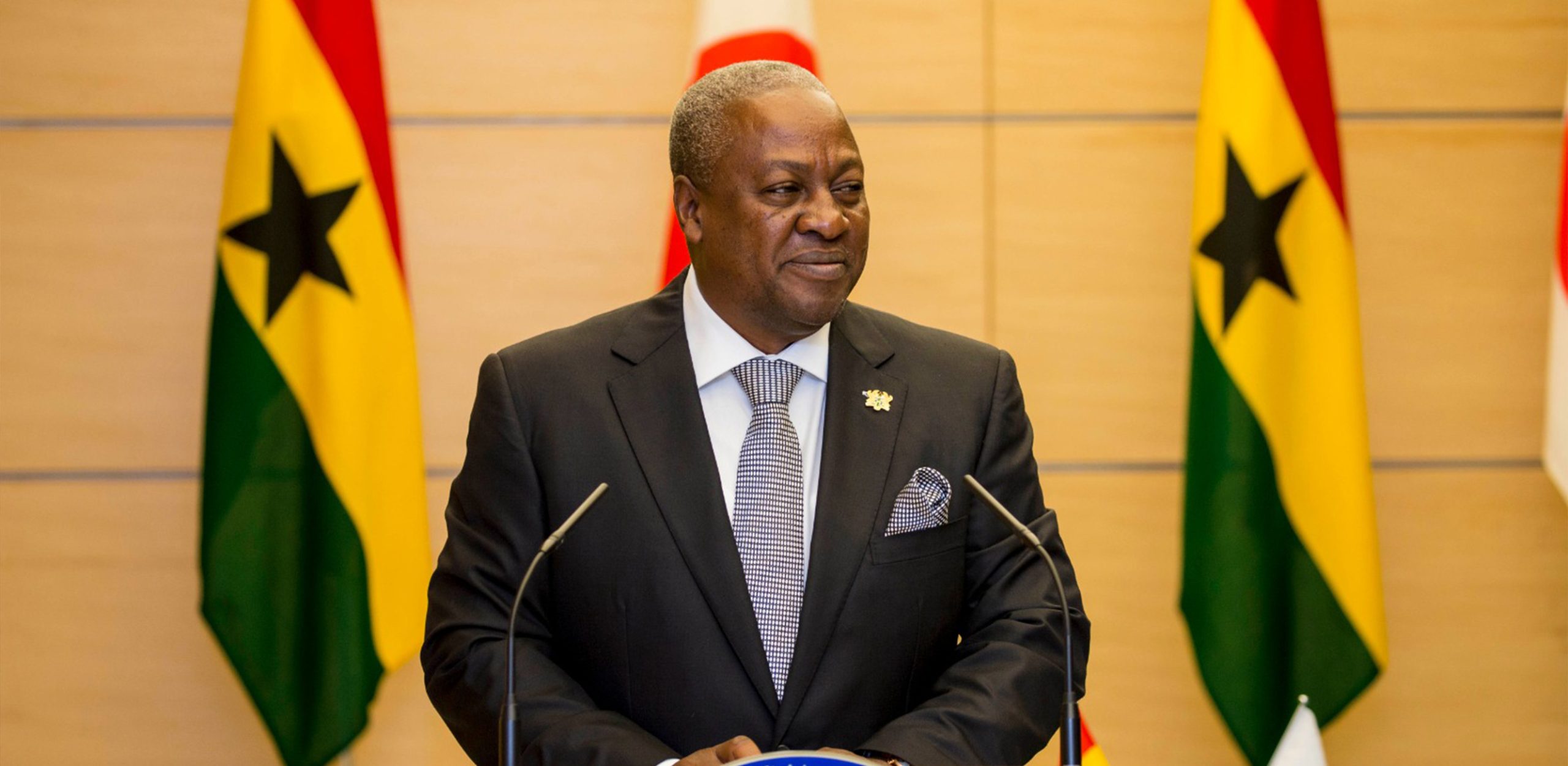
ACCRA, Ghana – President John Dramani Mahama has directly intervened in a heated national debate on religious freedom in schools, urging faith-based educational institutions to respect religious diversity as stipulated in existing agreements. His comments come amid an ongoing Supreme Court case against Wesley Girls’ Senior High School, which accuses the institution of suppressing Muslim students’ religious practices.
The President’s Stance and Legal Context
Speaking during a meeting with the National Peace Council on Wednesday, December 10, President Mahama addressed the dispute surrounding the rights of Muslim students in Christian mission schools. He pointed to a previously established Memorandum of Understanding (MoU) as the framework for resolution.
“We note that somebody has filed a case before the Supreme Court, which has yet to pronounce on the issue,” President Mahama stated. “But if you read what the faith-based organisations agreed in their own Memorandum of Understanding (MoU), I don’t see the point of this dispute. The MoU explicitly requires recognition of diversity.”
The President added, “I do not want to suggest it, but I think the Supreme Court has its work cut out for it,” acknowledging the judicial process while emphasizing the existing contractual agreements.
Details of the Memorandum of Understanding
The MoU referenced by President Mahama was validated on April 15, 2024. It was developed by the Conference of Managers of Education and facilitated by the National Peace Council, and was signed by leaders of major faith-based organizations including the Catholic Church, the Methodist Church, and the Office of the National Chief Imam.
Key provisions of the agreement include:
· Student Awareness: Schools must clearly state their culture, values, and rules. Students and parents must be made aware of these before choosing the school.
· Fasting: Students are to be allowed to fast according to their faith. However, parents or guardians must seek permission from school authorities, and students must still abide by all school rules. The document states that any health effects of fasting are not the school’s responsibility.
· Dress Code: The MoU mandates that only the prescribed uniform of the mission-based school must be respected.
The Spark: Wesley Girls’ High School Supreme Court Case
The President’s intervention responds to a lawsuit filed by Ghanaian citizen Shafic Osman against Wesley Girls’ Senior High School. The suit alleges the school has systematically prevented Muslim students from observing their religious practices.
The plaintiff is seeking a declaration that the school’s policies are inconsistent with Ghana’s 1992 Constitution. He is also asking the court to order the Ghana Education Service to issue constitutionally compliant guidelines for religious observance in all public schools. The Supreme Court has instructed the school to formally respond to the allegations.
This is not the first controversy for the school; a similar dispute arose in 2021 during Ramadan.
Broader Calls for Intervention and Historical Background
Pressure for presidential action had been building. Prior to Mahama’s statement, the Principal Imam of Masjid Salaam in Adabraka, Imam Sahamudeen Bamba Ahamad Muhammad, publicly called for the President to intervene. The Imam warned that enforcing strict Christian doctrines on Muslim students could endanger Ghana’s peaceful coexistence.
President Mahama has consistently emphasized religious tolerance. In a September 2025 meeting with the Conference of Regional Chief Imams, he stressed that no student should be compelled to abandon their faith, highlighting the practical challenges in communities where the only available school is run by a different religion.
The issue has deep roots. A 2021 U.S. Department of State report on religious freedom in Ghana noted “uneven enforcement” of government directives requiring schools to respect students’ religious practices, citing the earlier Wesley Girls’ fasting controversy. The report also mentioned a separate, landmark case where the Human Rights High Court ruled in favor of two Rastafarian students who were denied admission to Achimota School for refusing to cut their dreadlocks.
Analysis and Theological Perspective
The debate forces a confrontation between institutional identity and constitutional rights. The Methodist Church of Ghana and other Christian bodies have defended mission schools’ right to maintain their Christian ethos, arguing that government assistance is a partnership, not a takeover.
Rev. Dr. Kwame Ahaligah, a Professor of Intercultural Theology, analyzed the conflict as a theological challenge. He advocates for a “gospel of hospitality” over a “gospel of control,” arguing that allowing Muslim students to pray or fast does not secularize a Christian school but reflects the character of Jesus.
As the nation awaits the Supreme Court’s decision, President Mahama’s appeal directs the public and school authorities back to the negotiation table, underscoring that a framework for peaceful coexistence in mission schools already exists on paper and now requires full implementation.
Story By: Nortei Nabi Akoso