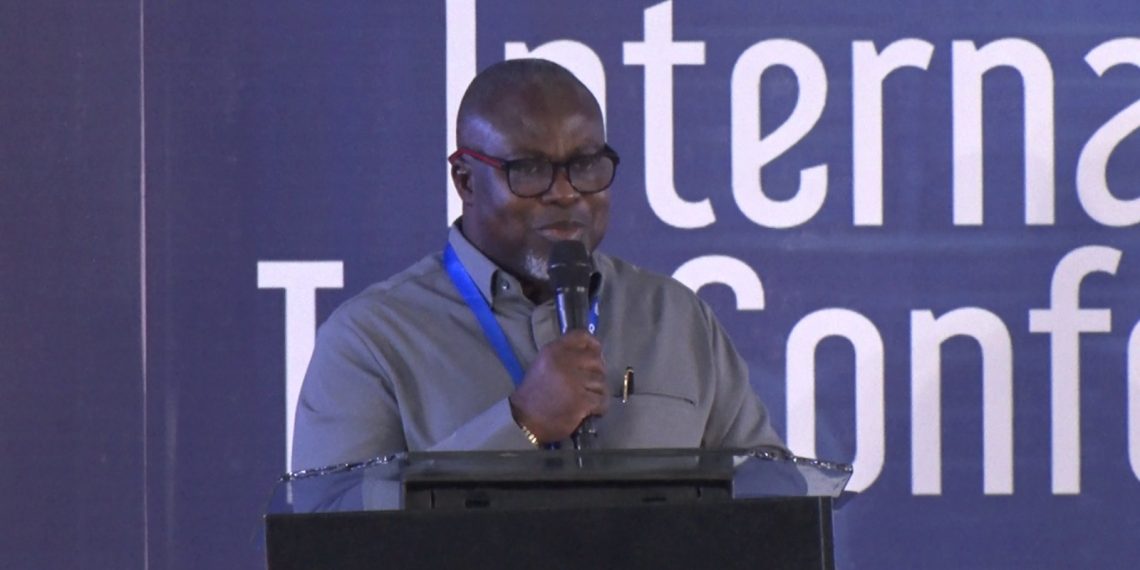
West Africa’s annual development financing gap has exceeded $100 billion, putting pressure on countries across the sub-region to significantly strengthen domestic revenue mobilisation, Commissioner-General of the Ghana Revenue Authority (GRA), Anthony Sarpong, has said.
Join Diaspora Networks
He argues that narrowing the gap will require countries to rely more heavily on their own domestic resources rather than external financing, particularly as governments face growing demands for infrastructure, social investment, climate adaptation and digital transformation.
Speaking at the 8th High-Level Policy Dialogue and 23rd General Assembly of the West Africa Tax Administration Forum (WATAF) in Accra, Mr Sarpong said stronger and more efficient tax systems would be central to addressing the region’s financing challenges.
“The answer to our development financing question does not lie primarily beyond our borders. It lies within them in our capacity to mobilise our own domestic resources fairly, efficiently, and sustainably.”
West Africa’s tax revenue lags behind
Mr Sarpong cited African Development Bank estimates indicating that West Africa’s annual development financing gap exceeds $100 billion.
At the same time, he said the region’s average tax-to-GDP ratio stands at approximately 13.5%, below the African average of 16.1% and the roughly 20% convergence benchmark for the West African Economic and Monetary Union.
The figures, he said, point to significant room for countries to increase domestic revenue without relying disproportionately on borrowing and external assistance.
Mr Sarpong identified broadening tax bases, formalising informal economic activity, improving natural resource revenue management and directing domestic savings towards long-term productive investment as key areas for reform.
“This gap can be closed through our own effort, that is, raising domestic revenue.”
Tax administration as state capacity
The GRA Commissioner-General said tax authorities must move beyond the traditional role of collecting revenue and become institutions that support broader economic development.
“Tax systems are not mere instruments for collecting revenue. They are the architecture of state capacity.”
He argued that stronger revenue mobilisation would provide governments with greater capacity to finance critical public services and development programmes while reducing vulnerabilities associated with external financing.
However, he stressed that tax reforms must strike a balance between improving compliance and maintaining an environment conducive to investment, entrepreneurship and private-sector growth.
Regional cooperation and technology
Mr Sarpong also called for more cooperation among West African tax administrations to tackle increasingly complex cross-border tax challenges.
These include illicit financial flows, transfer pricing, the digital economy and cross-border trade.
He noted that no tax administration can effectively address these challenges in isolation, making information sharing and regional coordination increasingly important.
“No tax administration, however well-resourced, can modernise in isolation.”
Technology, he said, should also become a major driver of revenue mobilisation.
He called for wider adoption of e-filing, e-payment systems, digital invoicing, data analytics and artificial intelligenceto improve compliance, reduce leakages and make tax administration more efficient.
Mr Sarpong identified deeper collaboration, technological innovation and stronger institutions as three key priorities for transforming tax administration across West Africa.
While pushing for stronger domestic revenue mobilisation, he urged revenue authorities to design tax systems that are fair, transparent and responsive to the needs of businesses and citizens.
He said sustainable development financing should be treated as a shared responsibility involving governments, revenue authorities, businesses, policymakers, development partners, researchers, civil society and citizens.
CitiNewsRoom