Plans are underway for Ghana to acquire an additional aircraft for presidential travel by November this year, a move expected to end the temporary arrangements that have recently sparked public debate over the President’s mode of transportation.
The announcement comes amid discussions surrounding the use of an aircraft belonging to President John Dramani Mahama’s brother for official trips. Some citizens have questioned whether the arrangement could create a perception of conflict of interest.
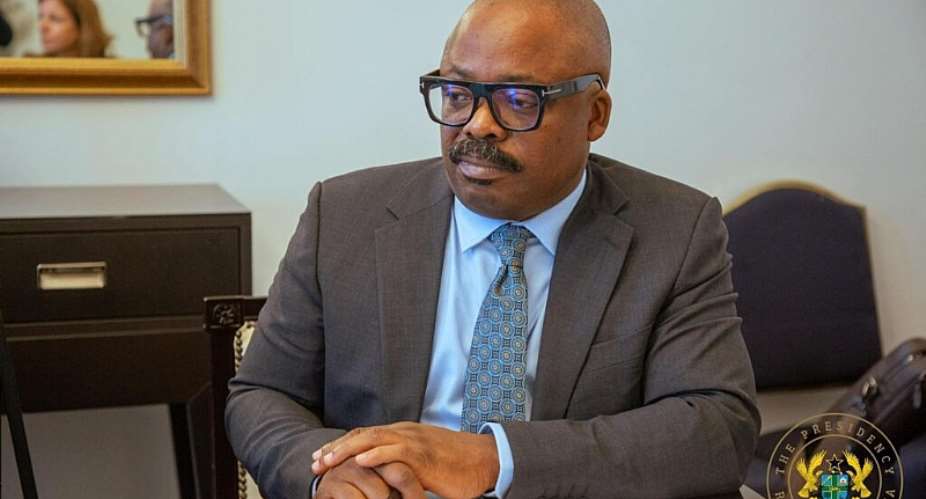
Addressing the issue, Callistus Mahama, the Executive Secretary to President John Dramani Mahama, noted that the concerns raised by the public are legitimate within a democratic system and deserve reflection rather than dismissal.
“In a democracy, citizens are duty-bound to ask questions about how public authority is exercised,” he stated, emphasising that public scrutiny strengthens governance and reinforces accountability.
According to him, presidential travel involves considerations far beyond simple transportation. Security protocols, diplomatic scheduling, communication systems, and the need for the Head of State to function fully while abroad all form part of the decision-making process.
He explained that Ghana’s current state aviation capacity presents limitations. Some aircraft historically used for government travel were not designed for long-range diplomatic missions, while others face operational constraints that make certain engagements difficult.
Commercial travel, though often suggested, is not always a viable option for a sitting President, particularly for intercontinental trips with tight diplomatic schedules. Beyond security implications, such arrangements can complicate logistics and hinder the execution of official duties during transit.
While acknowledging these practical realities, Callistus Mahama stressed that public perception remains critical.
“Even when a practical solution exists, leadership must remain attentive to how the public understands it,” he said, adding that President Mahama is conscious of the moral expectations attached to public office.
He noted that since returning to office under the Reset Agenda, the President has prioritised rebuilding institutional capacity, including within the Ghana Armed Forces, which play a key role in state aviation.
As part of ongoing reforms and retooling efforts, Ghana is expected to strengthen its presidential air transport capability. By November, an additional aircraft — including one dedicated to presidential travel — is projected to join the national fleet.
Once operational, the new aircraft will enable the country to rely fully on state assets for presidential travel, eliminating the need for temporary private arrangements.
Callistus Mahama underscored that the broader objective goes beyond acquiring an aircraft. He described it as part of a larger institutional reset aimed at restoring public trust and improving governance structures inherited with operational gaps.
“The issue is not merely about an aircraft,” he said. “It is about rebuilding systems that should have been stronger.”
He further noted that President Mahama remains mindful of the economic pressures facing Ghanaians and the importance of restraint in public spending, particularly in areas as symbolic as presidential travel.
www.modernghana.com