Minority Leader in Parliament, Osahen Alexander Kwamena Afenyo-Markin, has urged government appointees and all persons entrusted with public office to exercise power with humility and restraint, cautioning against its abuse for personal or partisan gain.
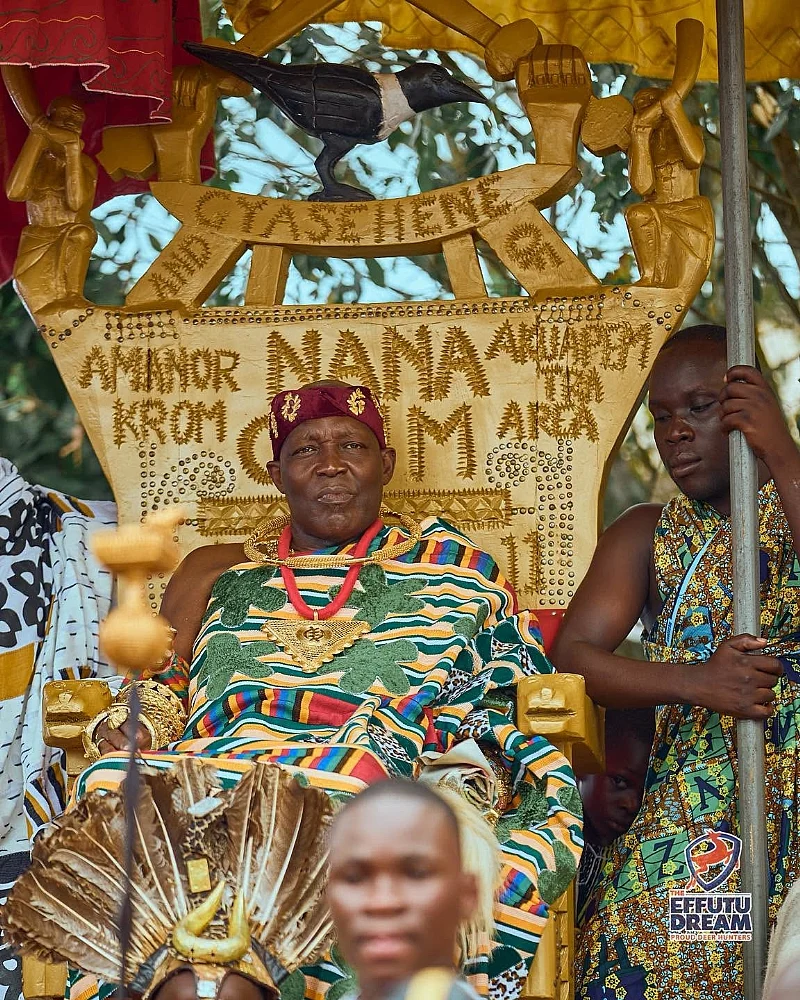
He delivered the message on Saturday, September 26, when he addressed a Grand Durbar of Chiefs and people of Akuapem Amanokrom in the Eastern Region. The event, hosted by the Gyase Division of the Akuapem State, was held under the distinguished patronage of HRM Oyeeman Okoforobour Osim Kwatia II, Gyasehene of Okuapem and Chief of Amanokrom.
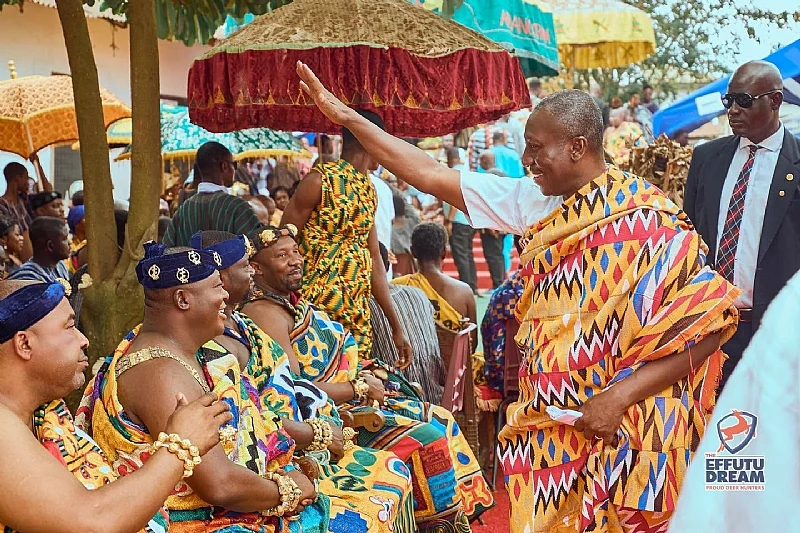
The historic durbar, themed “20 Years Of Odwira: Honouring Our Heritage, Securing Our Future,” brought together chiefs, queen mothers, traditional leaders, political figures and hundreds of citizens, including members of the Okuapeman diaspora.
The ceremony featured the paying of homages, the distribution of Gyasehene customary drinks, and a grand procession of chiefs through the streets of Amanokrom. The colourful display included the customary pouring of libation by Okyeamepanyin Osei Manu, followed by the resonant rhythms of the Fontomfrom drums.
The procession showcased a rich array of traditional authority, including the Twafohene, Ankyeasehene, Akyeamehene, Adawsohene, Dodowahene, Poribonhene, Bretuhene, Osomanyawa, Gyasehene, Asonahene, Gyasewahene, Gyasehemea, Akyempemhene and the Ankobeahene.
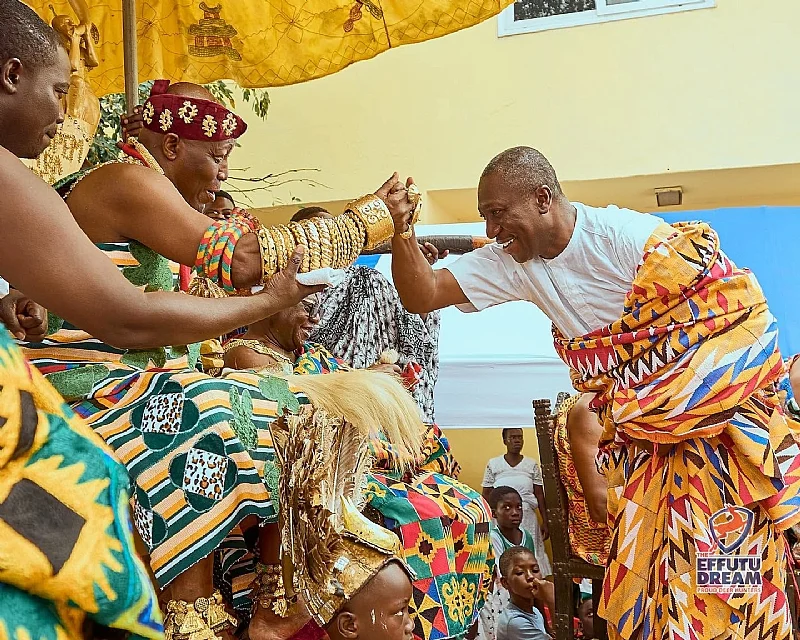
Addressing the gathering as Special Guest of Honour, Mr. Afenyo-Markin reminded leaders that power is transient and must be used to serve rather than intimidate.
“When the people give you the opportunity to serve, do not abuse power. Power is a trust that must be used to uplift the people and not to oppress them,” he said.
He emphasized that public service must be grounded in humility, accountability and respect for the rule of law, noting that abuse of authority only deepens public mistrust.
Touching on Ghana’s current political climate, the Minority Leader called for unity among political actors to restore the confidence of the electorate.

“We must as leaders present a united front if we want to attain and retain the trust of the electorates. Ghanaians are watching us and they expect us to lead with unity and purpose,” Osahen Afenyo Markin indicated.
He warned that excessive partisan rivalry undermines national development and urged politicians to prioritize Ghana’s collective interest.
“This partisan politics is unhealthy and must be stopped. We cannot build a nation when everything is reduced to NPP and NDC. We need to think Ghana first,” he stressed.
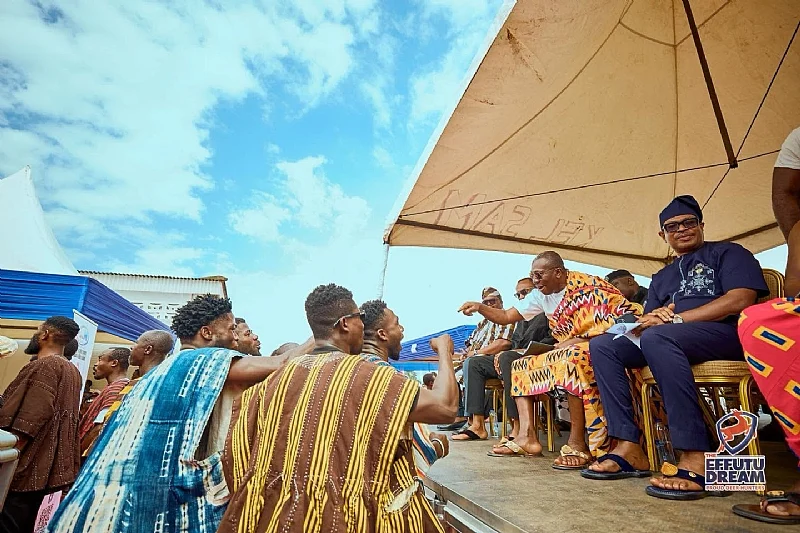
Mr. Afenyo-Markin also joined calls for urgent action to protect Ghana’s water bodies and environment, especially from the destructive impact of illegal mining. He stressed that safeguarding natural resources is a shared responsibility of traditional authorities, political leaders and citizens.
“If we destroy our rivers, we destroy our future,” he added.
He further noted that the core mandate of any government must be the creation of sustainable jobs, particularly for the youth, warning that high unemployment poses a serious threat to national stability.
“Our young people need hope, they need jobs, and they need a future to believe in,” he stated.
The Minority Leader encouraged traditional leaders to take a more active role in national development discourse by amplifying the needs of deprived communities.
He commended the Chiefs and people of Amanokrom for sustaining the Odwira Festival for two decades, describing it as a powerful symbol of unity, heritage and forward planning.
The Grand Durbar concluded with vibrant displays of Akuapem culture, drumming and dancing, accompanied by renewed calls from Nananom for peace, unity and accelerated development of the Akuapem State and Ghana at large.
About the Akuapem Odwira Festival
The Akuapem Odwira Festival serves multiple purposes, including purification, thanksgiving, honouring ancestors, eating the new yam, reaffirming political allegiances, renewing military and social order, and proclaiming the unity of the Akuapem State.
The festival affirms the spiritual values that guide the people’s way of life—values expressed in their relationship with the unseen, their environment, and their communal religious practices. It strengthens social bonds among Akuapem citizens both within the state and across Ghana.
Like all traditional festivals, Odwira blends ritual, ceremony, artistry and recreation, unfolding across various locations according to a defined schedule. It also provides opportunities for the renewal of the arts, with music and dance playing central roles.
Inspired by both religious and political events, the festival dramatizes Akuapem sacred myths, legends and historical episodes, including the Akatamanso War of 1826. Through songs and collective action, Odwira offers a unique platform for expressing group solidarity and remembering the community’s past.
The first Odwira Festival was celebrated on 16 October 1826, shortly after the Akatamanso War. Since then, the Akuapems and Adaebutuw have celebrated the festival 179 times, each with varying degrees of spiritual intensity.
Key historical dates include:
- 11 August 1826 – Ashanti Army defeated in the Akatamanso War
- 16 August 1826 – Spiritual consultations at the Odosu Shrine, Mpeniase Akropong
- 23 August 1826 – Decision to make Odwira an annual festival
- 6 September 1826 – First Adaebutuw festival celebrated after the war
Brief History of Akuapem Amanokrom
Amanokrom was founded in 1742 by Nana Amanor Awua, the town’s third ruler. It is one of the 17 principal towns of the original Akuapem State and forms the Adonten No. 3 (Main Army Number Three) division.
The town’s founders were descendants of the Akyem Abuakwa Asona clan, migrating southwards under the leadership of Nana Agyapong Tenten. Their movement eventually aligned with Nana Ofori Panin, settling at Pamen before joining the Akyem-led liberation of the Guan people from Akwamu oppression.
Historical accounts, including Reindorf (1887), document severe abuses suffered by the Guans under Akwamu rule, which contributed to the call for Akyem intervention.
List of Past Chiefs of Amanokrom
- Nana Ahenkora Kese (1550–1600) – Adanse Ofoase
- Nana Kwasi Wareko Ampem (1600–1642) – Adanse Ofoase
- Nana Agyepong Tenten (1642–1700) – Ofoase & Pamem
- Nana Kwatia Akompi I (1700–1736) – Pamem, Amamprobi
- Nana Osim Kwatia I (1736–1740) – Amamprobi / Akropong
- Nana Amanor Awua (1740–1760) – Akropong, Odomenae & Amanokrom
- Nana Fo Kwagyan (1760–1770) – Amanokrom
- Nana Adagkwa Asare Yiadom (1770–1784) – Amanokrom
- Nana Odame Tenten (1784–1796) – Amanokrom
- Nana Ofei Dankwa I (1796–1816) – Amanokrom
- Nana Epo Wosereka (1816–1825) – Amanokrom
- Nana Ohene Ntow (Koso) (1825–1835) – Amanokrom
- Nana Grogoo Bapo (1835–1844) – Amanokrom
- Nana Asamoah Amanor (1844–1850) – Amanokrom
- Nana Osabu Gyawu (1850–1855) – Amanokrom
- Nana Mensah Kuma (1855–1862) – Amanokrom
- Nana Kwasi Darko (1862–1911) – Amanokrom
- Nana Kwasi Asamoh (1911–1914) – Amanokrom
- Nana Kwadwo Darko (Kwadwo Pa) (1914–1919) – Amanokrom
- Nana Ofei Darko (1919–1925) – Amanokrom
- Nana Ampem Darko (1925–1942) – Amanokrom
- Nana Kwatia Akompi II (1943–1955) – Amanokrom
- Nana Ofei Dankwa II (1956–1974) – Amanokrom
- Oyeeman Wereko Ampem II (1975–2005) – Amanokrom
- Oyeeman Osim Kwatia II (2007–present) – Amanokrom
www.modernghana.com