Societies which have important periodic moments of celebrations and anniversaries cannot afford to lose the timing of such days. Although without the benefit of calendar as we have today, people of yore kept the periods of their festivals promptly and celebrated without missing those timelines
Stone pebbles used for counting is as ancient as man and our forebears used these stone to count and to maintain the days and months in conjunction with the changing patterns of the moon and stars, and their positionings which is known as TƐKƆMƆ in determining the appropriate days for the annual Homowo festival. This Ga expression means “picking of stone”.
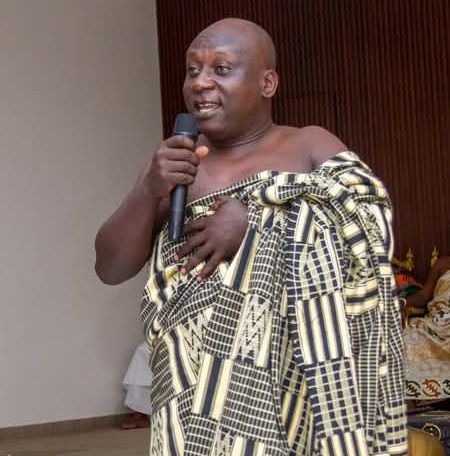
Among the duties of the traditional high priest or the spiritual head also known as Wulormor, he is also obligated to keep the time for all traditional and spiritual undertakings which includes Homowo for which reason TƐKƆMƆ becomes his cardinal duty.
The event of NIKPAMƆ which signifies the last harvest meant for the barn is the final act in the Homowo processes in September. It also marks the begining of TƐKƆMƆ in the new lunar year calendar of the Ga people with 13 cycles.
With the selection of stones, one is used to represent a day at every sundown. And for each accumulation of seven, one is graduated to stand for a week. The weeks accretion in accordance with the movements of the moon and stars will become deposits upon which the calculation of Homowo dates will be based upon.
Meanwhile there’s a concurrent accumulation ongoing in Nungua as well for the same reasons.
So, for credibility and accuracy there is an ancient convention between the Dantu Wulormor (the high priest of Lante Djan We) who represents Gamashie and Nuumo Borketey Larweh (high priest of Nungua), who will have to meet and do a reconciliation of their respective buildups. These two spiritual heads eventually and at every instance completes the process and determine the days or dates for Homowo activities to commence across the Ga and Dangme enclaves of the Greter Accra Region of Ghana.
A point worth noting is that, there is a school of thought which seem to suggest that the Dantu Wulormor goes to Nungua which in those days a complete journey. And it is at the instance of Nuumo Larkotey Aduawushie of Nae We.
Once the day or date have been established everything gets underway, and various activities starts running automatically since it becomes a matter days and weeks intervals between one and another activity, and all other towns and villages picks their source thereof. Homowo gets in the air and everyone gets busy including all spiritual heads and other traditional heads.
The Wulormei or the chief priests still carry out their ancient duty of TƐKƆMƆ because it forms part of their daily chores as gatekeepers of their societies. Observation of the celestial bodies in determining the days brings cosmic connection and bridges the gap between earthy and spiritual realms.
So the importance of TƐKƆMƆ cannot be underestimated since it sets the tone for Homowo activities across the Ga-Dangme country.
By Nii Kwardey Ntreh