
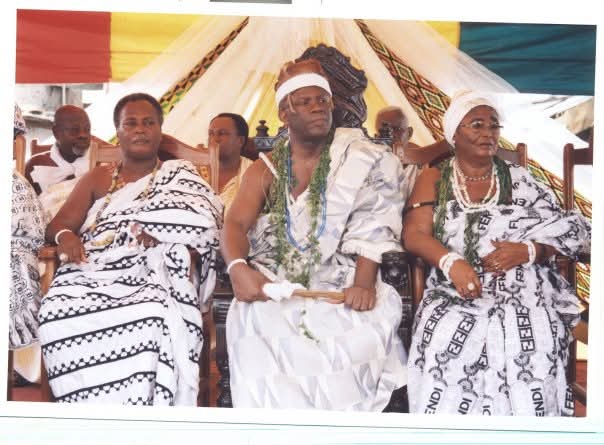
The Ga State must confront historical distortions that Dr Joe Blankson was not a legitimate king of the Ga State. Yes he was the King Tackie Tawiah III, Ga Maŋtsɛ.
SO STOP THE LIES! THERE’S TACKIE TAWIAH III, BEFORE NII ADAMA LATSE II & NII TEIKO TSURU II. And none of the last two ever sat with Ga Manyɛ Naa Dedei Omaadro III.
History is written by those who prevail in political battles, but truth has a way of surviving long after propaganda has faded. The ongoing debate surrounding the reign of Dr. Joe Blankson, who was enstooled as King Tackie Tawiah III on June 11, 2006, remains one of the most contentious chapters in the modern history of the Ga State.
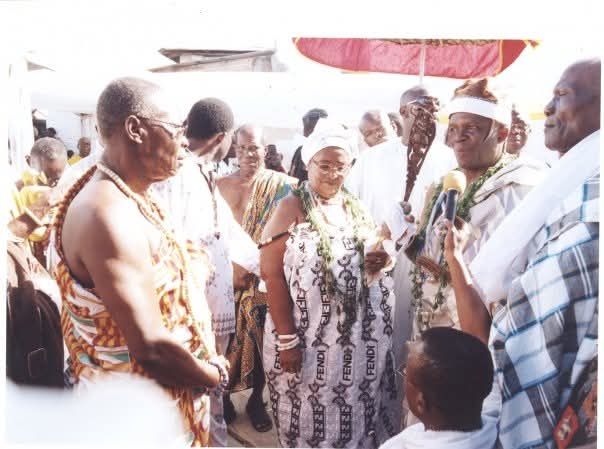
Yet after two decades of accusations, counter-accusations, and political maneuvering, it is time for an honest reassessment grounded in historical facts, customary law, and scholarly inquiry.
The central question is simple: Was King Tackie Tawiah III a legitimate Ga Maŋtsɛ, or was he merely a pretender as his opponents have long claimed?
A careful examination of the available evidence suggests that the narrative commonly repeated against him is not only incomplete but deeply misleading.
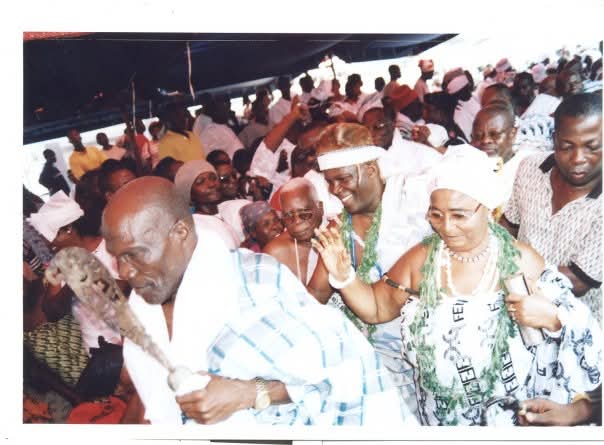
Dr. Joe Blankson’s royal credentials were never seriously challenged on genealogical grounds. He descended from King Tackie Tawiah I through the Teiko Tsuru We, one of the recognized royal houses of the Ga State.
His enstoolment was conducted according to customary procedures and overseen by kingmakers who believed they were acting within the traditions of the Ga people. Despite years of opposition, no court of competent jurisdiction conclusively invalidated his installation on customary grounds.
What distinguished King Tackie Tawiah III was not only his royal lineage but also his intellectual accomplishments and vision for development. Armed with advanced academic training in law and political science from the United States, he brought a level of educational attainment rarely seen in traditional leadership. His service on Ghana’s National Development Planning Commission reflected a broader commitment to nation-building and modernization.
Unfortunately, his reign soon became entangled in a struggle that was as much political as it was customary.
One of the most persistent claims against King Tackie Tawiah III is that he was imposed on the Ga State by the government of the day. Yet there is little evidence to support this assertion. His enstoolment was undertaken by traditional authorities and financed through customary channels. The allegation of political sponsorship became a convenient rallying cry for factions seeking to challenge his authority and justify resistance to his leadership.
Another widely circulated claim is that he was never accepted by the Ga Traditional Council, however, he was the president of the Ga State or Ga Traditional Council and recognised by the Greater Accra Regional House of Chiefs.
In fact even if acceptance or rejection by a council faction that alone cannot determine legitimacy, particularly during periods of institutional turmoil.
The years surrounding his reign were marked by deep rebellion, gangsterism, and outlaws competing claims to authority, and violent takeovers of traditional institutions including his palace.
To portray the opposition to his reign as a unanimous customary verdict oversimplifies a far more complex reality, as it had never been the case of any Ga Maŋtsɛ.
Equally questionable is the assertion that King Tackie Tawiah III was responsible for the Ga chieftaincy crisis. The roots of the crisis predated his enstoolment and emerged following the death of Nii Amugi II in 2005.
The subsequent years witnessed intense struggles involving rival claimants, factional disputes, and the rise of groups accused of using force and intimidation to influence traditional affairs. Rather than causing the crisis, King Tackie Tawiah III became one of its principal casualties.
The controversy remains relevant today because unresolved historical questions continue to shape contemporary perceptions of legitimacy within the Ga State.
While the current occupant of the Ga Mantse Stool enjoys recognition and authority, historical disputes should not be buried merely because time has passed. Genuine reconciliation can only emerge from a willingness to confront uncomfortable truths.
The Ga State has long been admired for its rich traditions, resilience, and commitment to justice. Those values require more than ceremonial respect; they demand intellectual honesty. If mistakes were made, they should be acknowledged.
If political interests distorted customary processes, those distortions should be examined. If a legitimate king was denied recognition through means inconsistent with tradition, history deserves correction.
This is not a call for division or renewed conflict. Nor is it an appeal to destabilize the current traditional order. Rather, it is a call for historical clarity and institutional courage.
The Ga Traditional Council, the National House of Chiefs, and relevant state institutions should consider initiating a scholarly and independent review of the events surrounding the reign of King Tackie Tawiah III. Such a review could help separate fact from factional narratives and contribute to a more accurate historical record.
Nations and peoples mature when they are willing to revisit difficult chapters of their history. The Ga State is no exception.
The truth is not an enemy of tradition. On the contrary, tradition is strengthened when it is anchored in truth. Whether one ultimately agrees or disagrees with the legacy of King Tackie Tawiah III, there should be no fear in examining the historical record honestly.
Justice delayed may be painful, but justice denied diminishes us all. And as long as truth cannot be buried, King Tackie Tawiah III cannot be buried alive.
By Osɔfo Nii Naate Atswele Agbo Nartey


3 Comments
https://shorturl.fm/wEtXQ
https://shorturl.fm/3bkKh
https://shorturl.fm/2CI6c